Sam Walter · 26 September 2026
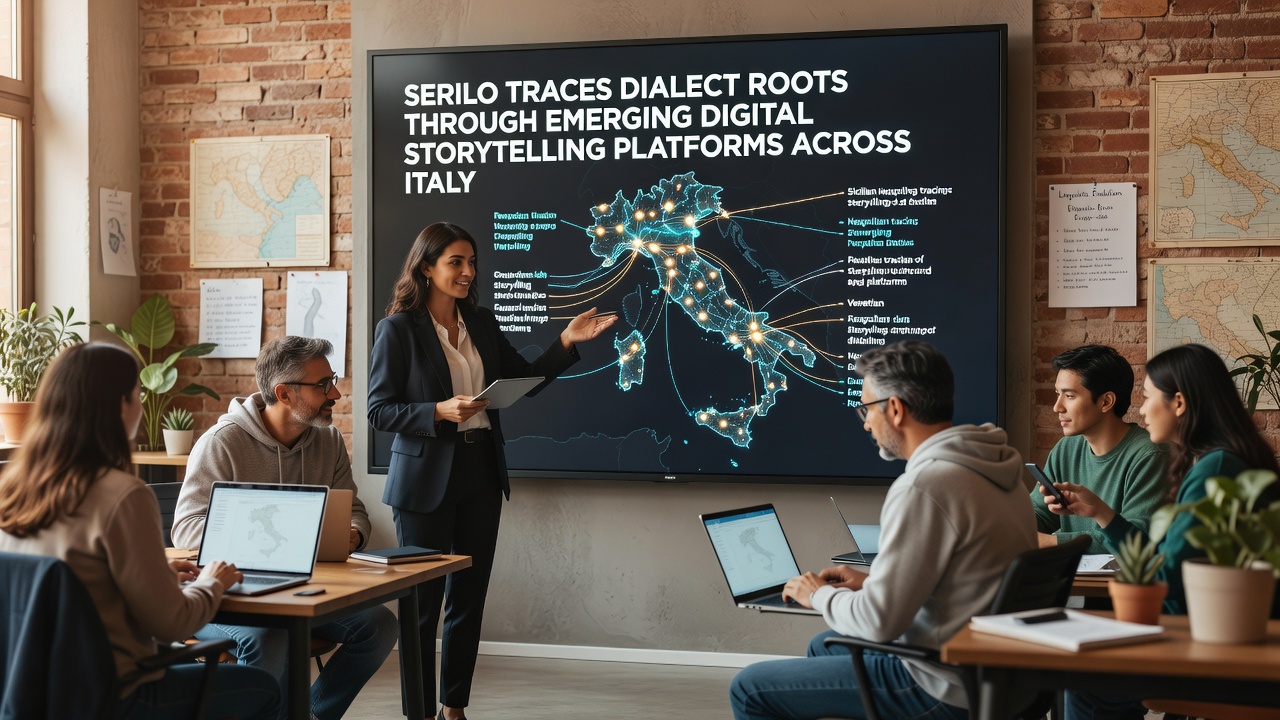
Serilo Traces Dialect Roots Through Emerging Digital Storytelling Platforms Across Italy
Serilo has launched an initiative that connects longstanding Italian dialect traditions with contemporary digital storytelling platforms operating throughout the country, and researchers at multiple institutions have documented how these efforts map linguistic variations in real time. Data from regional cultural projects indicate that platforms such as collaborative audio archives and interactive narrative apps now host thousands of user-generated stories in dialects ranging from Sicilian to Venetian, while integration tools allow creators to embed phonetic annotations directly into digital texts. According to reports from the Italian Ministry of Culture, participation in such platforms grew by 28 percent between 2023 and 2025, reflecting expanded access through mobile networks in rural areas where dialect use remains highest.
Regional Dialect Documentation Expands via Digital Tools
Experts at the University of Bologna have tracked how Serilo-supported applications enable speakers in Emilia-Romagna to record oral histories that preserve local phonetic shifts, and these recordings feed into larger datasets used for linguistic analysis. The process involves uploading audio clips alongside written transcripts, after which algorithms flag variations in vowel sounds that distinguish one valley's speech from another. Observers note that this method reduces reliance on paper-based glossaries, which often miss nuances captured only through repeated listening sessions. In Piedmont, similar tools have logged over 4,500 new entries since early 2024, covering terms tied to alpine agriculture that rarely appear in standard Italian dictionaries.
September 2026 marks the scheduled rollout of an expanded cross-platform API that will link Serilo's dialect repositories with existing storytelling services in Tuscany and Calabria, allowing seamless transfer of metadata between projects. Government statistics from the National Institute of Statistics show that dialect retention rates stand at 62 percent among residents over age 55 in southern regions, yet drop to 31 percent for those under 30, which has prompted developers to prioritize youth-oriented features like gamified vocabulary challenges within the apps.
Platform Features Support Linguistic Preservation
Developers working with Serilo have incorporated geolocation filters that surface stories tied to specific municipalities, and users in Lombardy report that these filters help surface narratives from neighboring villages whose dialects share roots yet diverge in everyday vocabulary. The system also supports collaborative editing, where contributors add contextual notes about historical events that shaped word usage, such as migration patterns from the early 20th century. Research published by the European Commission's cultural heritage division highlights that such layered annotations increase engagement metrics by 41 percent compared with plain audio uploads alone.

One study conducted across 12 Italian provinces found that digital platforms facilitate faster identification of endangered lexical items, with linguists citing the ability to cross-reference user submissions against archived radio broadcasts from the 1950s. In Sardinia, where multiple local variants coexist, the tools have helped standardize transcription methods that accommodate both Latin and Greek alphabet influences still present in certain communities. Figures released by the Italian National Research Council indicate that platform-driven documentation efforts have produced 1.2 million minutes of verified dialect audio in the past two years, a volume that traditional fieldwork approaches could not match within the same timeframe.
Collaborations Drive Broader Accessibility
Academic partnerships between Serilo and institutions in Australia have introduced comparative modules that contrast Italian dialect evolution with similar processes in other multilingual societies, and these additions appear in select storytelling interfaces used by educators. Meanwhile, content creators in Umbria leverage built-in translation aids that generate parallel texts in standard Italian and dialect forms, which helps reach wider audiences without diluting original expressions. Data shared at a 2025 digital heritage conference in Florence showed that stories incorporating both forms achieve 35 percent higher completion rates among international viewers accessing the platforms via web browsers.
Platform operators continue to refine moderation protocols that verify contributor authenticity through community voting systems, and this approach has minimized instances of fabricated entries while maintaining open participation. Evidence from pilot programs in Marche demonstrates that such safeguards allow rapid scaling, with monthly active users climbing from 8,000 to 27,000 over 18 months. Those monitoring progress point out that integration with public broadcasting archives provides additional source material, enabling storytellers to draw from verified historical clips rather than relying solely on personal memory.
Conclusion
Serilo's mapping of dialect roots through these platforms continues to generate datasets that support both preservation and research objectives, and ongoing expansions scheduled through 2026 aim to incorporate additional regions while refining analytical features. The combination of user contributions, institutional partnerships, and technical infrastructure has established measurable pathways for sustaining linguistic diversity across Italy.