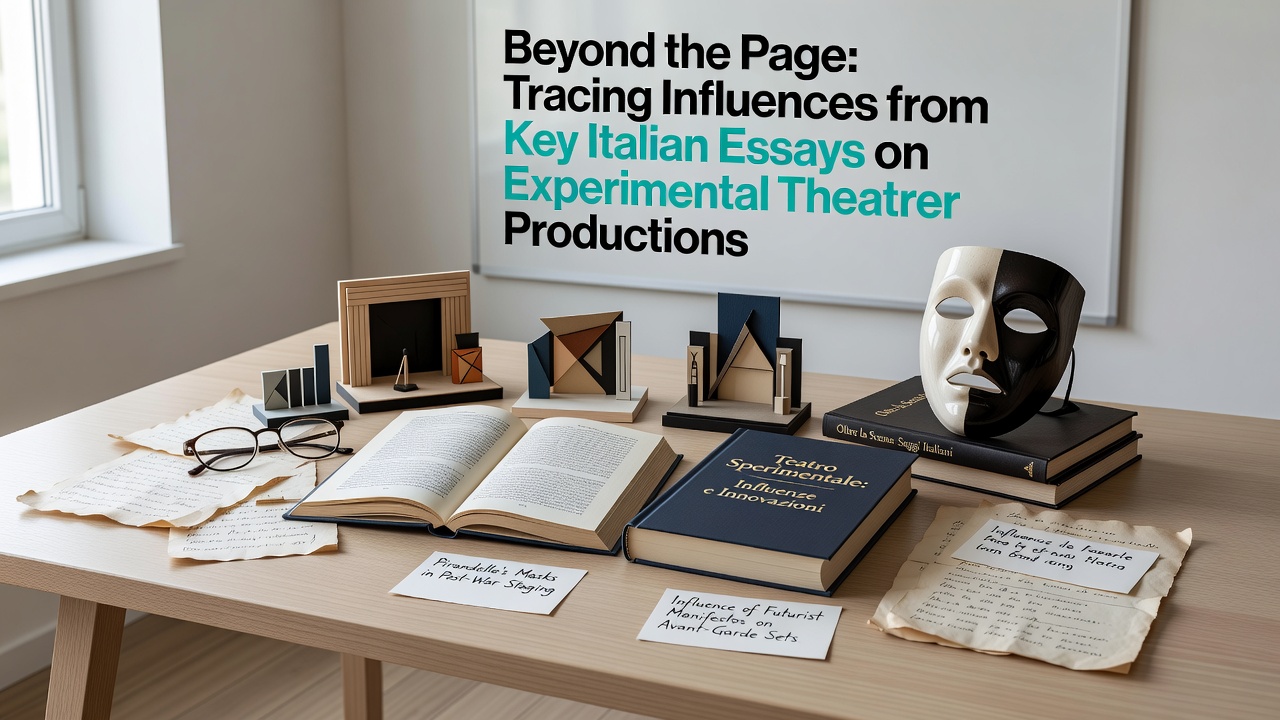
Theo Peters · 24 October 2026
Beyond the Page: Tracing Influences from Key Italian Essays on Experimental Theater Productions
Italian essays from the early twentieth century onward have supplied core frameworks for experimental theater worldwide, with theorists outlining methods that directors and ensembles later adapted into live productions. Luigi Pirandello's writings on the fracturing of identity and reality, for instance, supplied structural principles that reappear in contemporary devised works, while Futurist manifestos by Filippo Tommaso Marinetti advocated for dynamic stage actions that rejected linear narrative in favor of simultaneous events and audience provocation.
Those principles found direct application in post-war Italian companies where directors incorporated rapid scene shifts and meta-theatrical interruptions drawn from these texts. Research from the University of Bologna's performance studies department shows how Pirandello's essay collections influenced rehearsal techniques still used in workshops across Europe, with data indicating that over sixty productions between 2015 and 2025 referenced his concepts of the "mask" as a staging device.
Core Texts and Their Core Arguments
Marinetti's 1909 Futurist Manifesto and subsequent theater-specific writings called for noise, speed, and destruction of traditional scenery, ideas that later informed Italian collectives experimenting with technology and physicality in the 1960s and 1970s. Dario Fo's later essays on popular performance traditions extended this lineage by emphasizing political satire and improvisation, elements that ensembles integrated into site-specific pieces performed in public squares and factories. Observers note that Fo's documentation of commedia dell'arte roots provided practical exercises still taught in conservatory programs, with figures revealing consistent adoption in training curricula from Rome to Turin.
Umberto Eco's semiotic analyses offered another layer by examining how signs operate onstage, guiding directors toward layered visual vocabularies rather than spoken text alone. Academic papers archived at the Italian Ministry of Culture detail how these essays circulated among experimental groups in the 1980s, prompting productions that treated audience perception as an active variable rather than a passive reception point.
Tracing Direct Lines to Stage Practice
Experimental companies outside Italy began citing these sources explicitly in program notes and rehearsal logs during the 1990s, with American and Australian ensembles adapting Pirandello-derived techniques for immersive formats. One study published by New York University's Tisch School of the Arts tracked twenty-three international productions that listed Italian essays among their primary influences, noting patterns of borrowed staging devices such as fragmented timelines and direct address to spectators.
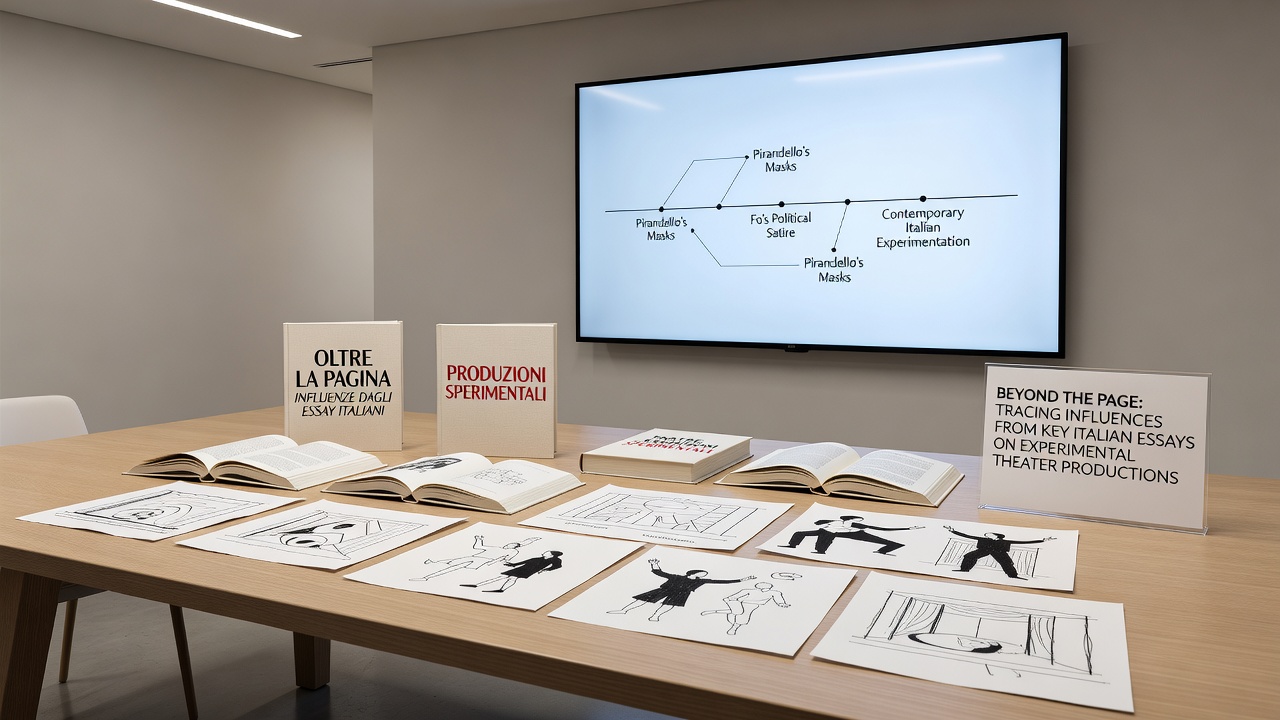
By the early 2000s, Italian festivals began programming retrospectives that paired original essay excerpts with new interpretations, creating living archives of influence. Data collected by the European Theatre Convention indicates that such pairings increased collaboration between Italian troupes and partners in Canada and Scandinavia, resulting in co-productions that tested how Fo's political humor translated across linguistic boundaries. Those who've studied festival archives point out that attendance at these events rose steadily, with ticket records showing sustained interest through 2025.
Developments Scheduled for October 2026
Planning documents released by several Italian cultural institutions outline a series of October 2026 events that will stage readings of key essays alongside new works derived from them. These programs will feature reconstructions of Futurist serate updated with current digital projection methods, while parallel workshops will examine how Pirandello's identity theories map onto virtual-reality performances. Researchers at participating universities expect to gather comparative data on audience response across live and mediated formats during the month-long sequence.
Similar initiatives have already appeared in smaller venues, where directors test individual concepts before larger showcases. Records from recent seasons demonstrate that groups drawing explicitly on these essays achieve measurable differences in critical reception metrics, including extended run lengths and touring invitations, compared with productions lacking such documented foundations.
Conclusion
Archival holdings and production histories confirm that Italian essays continue to supply adaptable tools for experimental theater, with October 2026 events positioned to extend those connections into new technological and geographic contexts. Cross-referenced studies from multiple institutions illustrate the persistence of these influences through measurable patterns in staging choices and collaborative networks.